
Rethinking Food Systems

The State of Exception
In the history of nations, food has never been reduced to a commodity of exchange. It is the fundamental currency of political legitimacy. For the Nigerian state, the ability to feed its population is the baseline test of sovereignty. Yet, as we survey the landscape in early 2026, it is evident that this test is being failed due to a collapse of coordination.
We find ourselves trapped in a permanent State of Exception. Governance in the agricultural sector has been replaced by a series of frantic, reactive interventions: the release of strategic grains, the temporary waiving of import duties, and the deployment of task forces to police hoarders. These do not qualify as policies as they are best described as spasms. They are the actions of a state that has lost control of the routine levers of market management and is forced to govern by emergency decree.
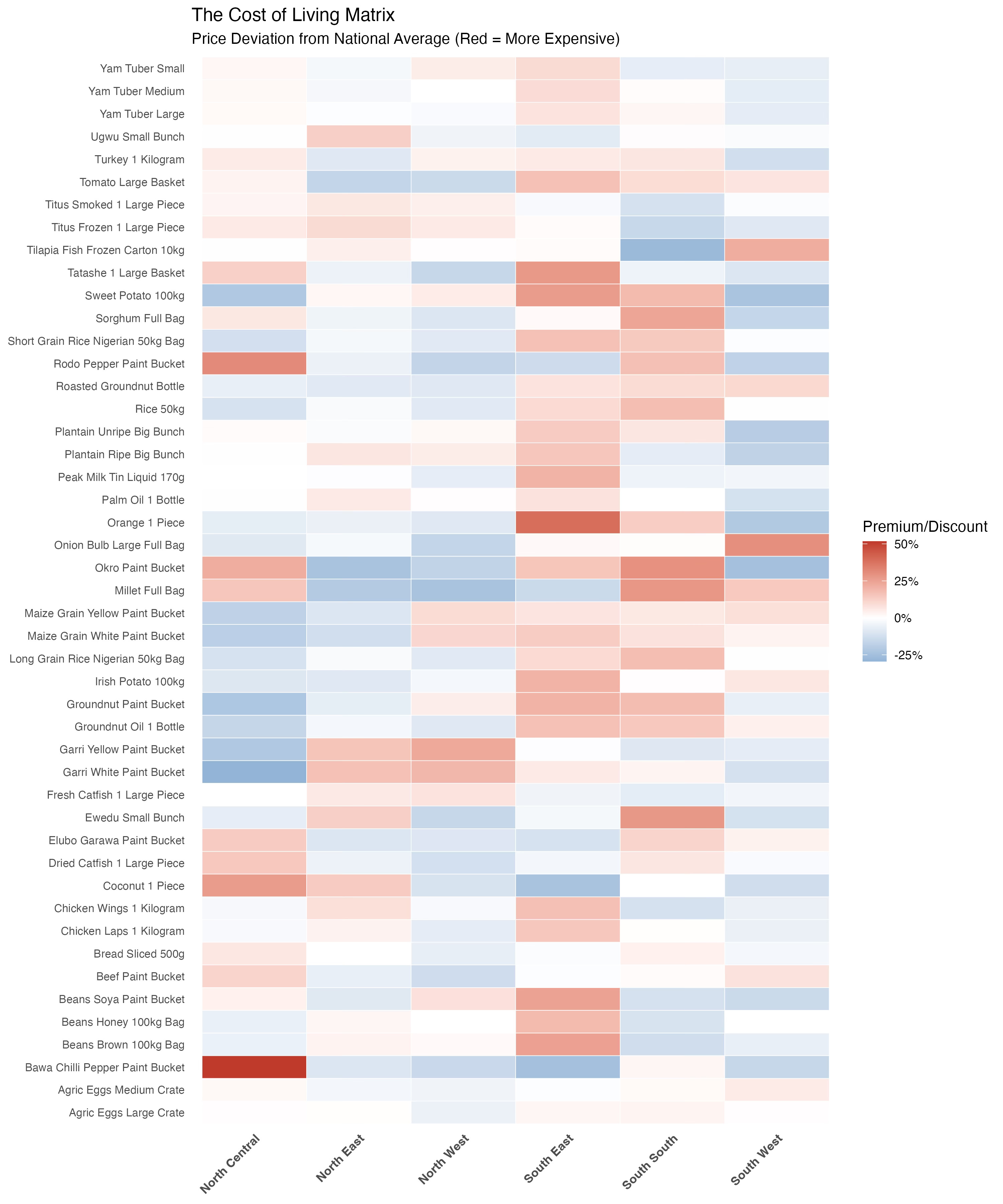
The consequences are visible in the stark divergence of our reality. In the North-West, a bumper harvest of maize creates a glut that crashes prices below the cost of production, bankrupting the farmer. Simultaneously, in the South-East, the price of that same maize spikes by 50% due to the transit friction of extortionate checkpoints and broken logistics. The state, blinded by a lack of effectual data and paralyzed by bureaucratic inertia, watches this paradox unfold, ad becomes powerless to bridge the gap.
I strongly posit that the era of agricultural reform which is understood as simply buying tractors or distributing fertilizer must end. We must pivot to an era of enacting a solid Food Systems Architecture. This requires a granular understanding of the political economy of hunger: the hidden liquidity traps that force farmers to sell low, the illegibility of the informal markets that feed 90% of our people, and the logistical nightmares that sever our rural production from our urban consumption.
We do not need more intent to solve this crisis. We need durability. We need mechanisms that survive the four-year election cycle. We need a state that functions not as a generous donor during crises, but as a reliable market-maker in times of peace and plenty.
The Liquidity-Hunger Nexus
To understand why Nigerian agriculture remains trapped in low productivity, we must look beyond the farm. We must look at the school.
One of the most overlooked drivers of rural poverty in Nigeria is the collision between the Agrarian Cycle and the Academic Calendar. In Nigeria, the primary harvest season (October–January) coincides almost perfectly with the resumption of schools and the payment of tuition fees (September, May, and January). This synchronization creates a Liquidity Trap of devastating proportions.
Consider the typical smallholder farmer in Oyo State or the grain producer in Kaduna. In January, they face an inflexible, non-negotiable demand for liquidity; school fees. To meet this obligation, they are forced to sell their harvest immediately, regardless of the market price.
This creates a Harvest Glut, where millions of farmers flood the market simultaneously, crashing prices to their lowest point of the year. The farmer, desperate for cash, becomes a price taker, selling his maize at ₦400/kg. Six months later, during the “lean season” (June–August), the price of that same maize rises to ₦900/kg. But the farmer has no grain left to sell. In fact, he often becomes a net buyer of food, using his depleted savings to buy back the very commodity he grew, at double the price.
This is a classing issue of financial engineering as this cannot be blamed on farming. The educational timeline is cannibalizing the agricultural value chain. However, this is not a position against education. There has to be a bridge.
The Tuition-Harvest Bridge (THB)
The solution, therefore, is not just more credit, but timed liquidity. I propose the institutionalization of a Tuition-Harvest Bridge.
In a bid to encourage farmers to enroll their children in schools, we need to create an avenue for the state to act with precision by treating education costs as a financial derivative. Under this model, state-backed development banks would settle school fees directly with educational institutions on behalf of the farmer at the start of the term. In exchange, the farmer deposits an equivalent value of grain into a licensed Warehouse Receipt System (WRS). This helps the state build a warehouse system, strengthen its reserve and capacity for reserve, and the farmers in solving their immediate problems.
This mechanism achieves three critical goals:
-
It stabilises price and removes the desperate need to sell in January, preventing the market crash.
-
It allows the farmer to maximize their asset and hold their grain (via the warehouse receipt) until the lean season, capturing the 30–50% price appreciation.
-
Because the funds go directly to the school, the risk of diversion (spending the loan on consumption) is eliminated. Credit is safe.
The Urban Bias and Terms of Trade
While the rural producer is trapped by liquidity, the urban consumer is trapped by policy. For decades, Nigeria’s political economy has been defined by an Urban Bias. It is a tacit agreement to keep food prices artificially low to prevent urban unrest (e.g., in Lagos or Abuja), often at the expense of rural producer margins.
However, this social contract has fractured. Inflationary pressures on inputs (fertilizer, fuel, labour) mean that farmers cannot afford to produce cheap food. Yet, urban wages have stagnated. The result is a deadlock where the farmer cannot sell low enough for the city, and the city cannot buy high enough for the farmer.
The state’s response was to introduce import waivers and price controls. This only exacerbates the injury to the rural economy. A durable solution requires Supply-Side De-risking: reducing the cost of moving food so that the farmer earns more while the consumer pays less. This brings us to the crisis of logistics.
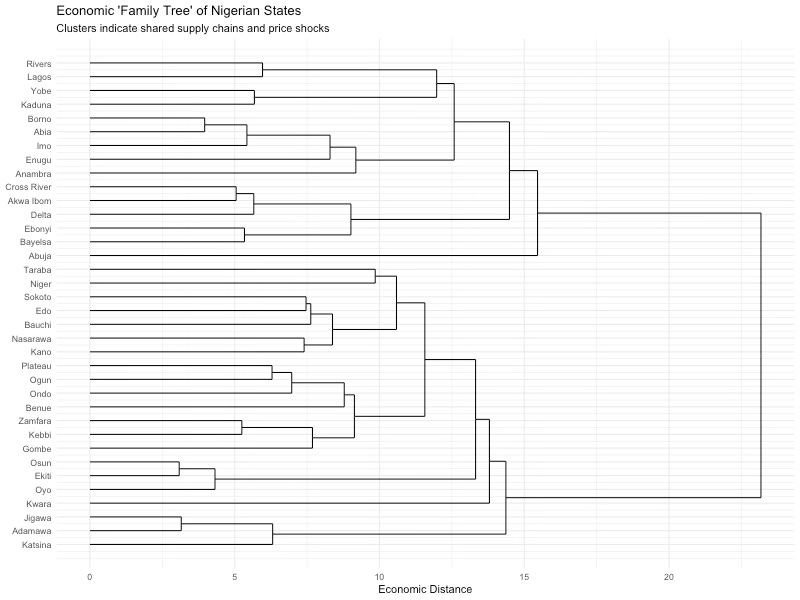
The Ontology of Hunger
In the hierarchy of state responsibilities, the provision of food or more accurately, the guarantee of the conditions for its availability is a foundational Social Contract with the people. For the Nigerian state, this contract has somehow been suspended. We currently exist in what political theorist Giorgio Agamben would term a State of Exception, where the emergency has become the rule.
In recent times, the Nigerian food system is no longer governed by routine policy instruments; tariffs, extension services, or strategic reserves. Instead, it is governed by spasms of executive intervention: the sudden release of grain from a silo in Niger State, the panicked deployment of a task force to raid warehouses in Kano, or the temporary suspension of duties on imported husked rice.
To understand how we arrived here, we must look beyond the convenient excuses of insecurity or climate change. While banditry in the North-West and flooding in the Benue Trough are accelerators of the crisis, they are not the root cause. The root cause is a collapse of legibility. The Nigerian state does not know how much food is produced, it does not know who is moving it, and it does not know where it is stored until the price spikes in an urban market.
The Historical Drift: From Production to Transaction
The trajectory of Nigerian agricultural policy has been a slow drift from production-centric governance to transaction-centric politics. In the 1970s, theOperation Feed the Nation (OFN) and the subsequent Green Revolution were flawed, yes, but they were rooted in an attempt to build institutional capacity. Marketing boards, extension networks, and research institutes like IITA (International Institute of Tropical Agriculture) and CRIN (Cocoa Research Institute of Nigeria).
However, following the structural adjustment era of the late 1980s, these institutions were hollowed out. The Marketing Boards, which (despite their inefficiencies) provided a guaranteed floor price for farmers, were dissolved. In their place, we left a vacuum. We assumed the Free Market would step in to build silos, grade grain, and clear roads.
It did not. Instead, the Informal Market stepped in. The vacuum was filled by the Dawanau grain merchants in Kano, the Bodija market associations in Ibadan, and the transport unions. These actors built a robust, highly efficient, but completely opaque system. They provided the credit that banks refused to give, and the logistics that the railway failed to offer.
By 2026, the state has woken up to realize it is a stranger in its own agricultural sector. The government controls the Ministry in Abuja, but the Market Unions control the price in the street. This disconnect is one of the primary drivers of our current volatility. When the Federal Government announces a Strategic Release of 40,000 metric tonnes, it is a drop in the ocean compared to the millions of tonnes held in the invisible warehouses of the informal sector.
The Capacity Gap
There is a pervasive myth in Nigerian policy circles that the solution to the food crisis is more funding. This is empirically false. A review of the budgetary performance of the Federal Ministry of Agriculture and Food Security over the last decade (2015–2025) reveals the Idle Fund Paradox.
Year after year, capital releases for rural roads or processing zones are returned to the treasury unspent, or worse, are rushed into low-utility procurement (like buying tractors that have no drivers) in the final weeks of the fiscal year to avoid expiration. The constraint is not money.
We face a situation where the administrative timeline (the speed at which a file moves from a Director to a Permanent Secretary) is slower than the agronomic timeline (the speed at which maize matures). If the approval for fertilizer procurement comes three weeks late, the season is lost. Nature does not wait for the Procurement Act.
Informal Markets and the Crisis of Legibility
I strongly believe that if you cannot measure it, you cannot govern it. The fundamental weakness of the Nigerian state in the agricultural sector is its blind spots.
Over 90% of Nigeria’s food moves through informal channels. Unregistered aggregators, roadside markets, and cash-based truckers. To the modern bureaucrat in Abuja, this system is chaotic, inefficient, and illegible. Because the state cannot see these transactions, it cannot tax them effectively, nor can it support them efficiently.
Because the informal sector operates outside the formal banking and tax net, the state resorts to Proxy Taxation. This manifests as the myriad checkpoints, roadblocks, and revenue task forces that line our highways.
A truck of tomatoes leaving Kano for Lagos encounters an average of 45 to 60 stopping points. At each point, a levy is extracted. Sometimes by state agents, sometimes by local unions, sometimes by security forces. This is nothing but predation.
Data from 2025 suggests that these transit rents account for nearly 35% of the final retail price of perishable goods in Southern Nigeria. The South-East Logistics Premium where food prices in Enugu are 40% higher than in the North-Central is almost entirely a function of this predatory friction.
From Predation to Partnership
To solve this, we must stop trying to formalize the informal sector by force. Instead, we must practice Hybrid Governance.
We need to integrate the traditional market structures. The Sarkin Kasuwa, the Market Women’s Associations, and the National Union of Road Transport Workers (NURTW into the policy architecture.
-
We propose the Interstate Food Transit Permit (IFTP). A single, digital, annual payment that clears a vehicle for Green Corridor passage across all 36 states. The revenue is collected centrally and shared automatically with state governments, removing the incentive for local roadblocks.
-
Rather than trying to register 20 million farmers, the state should focus on registering the 50,000 Key Nodes, the aggregators and warehouse owners who control the flow. By bringing them into the Warehouse Receipt System, we turn the informal storage of grain into formal national strategic reserves, without the state having to build a single new silo.
State Capacity and Fiscal Constraints
When the state attempts to procure inputs centrally, the friction of the Public Procurement Act often ensures that by the time the inputs reach the local government distribution centres, the harvest window has closed. This bureaucratic lag acts as a silent tax on state capacity, rendering massive budgets impotent.
Furthermore, our fiscal federalism creates a Last Mile gap. While the Federal Government controls the bulk of the policy direction (and the major intervention funds like the Anchor Borrowers’ Programme), the actual land and the farmers are under the jurisdiction of State and Local Governments.
Often, federal interventions land in states without the institutional sockets to plug into. A federal silo may be built in a state, but the state government has no budget line for its maintenance, and the local government has no road connecting the farm to that silo. The result is islands of infrastructure surrounded by oceans of neglect.
Policy Implication: We must move from Project-Based Financing to Program-Based Fiscal Transfers. Federal funds should not build silos. They should be incentivizing States and LGAs to build their own systems by offering Matching Grants tied to specific performance indicators such as the number of registered FBOs or the kilometres of rural roads graded.
Policy Durability and Logistics
The physical movement of food in Nigeria is currently one of the highest-risk business activities in the country. The risk premium attached to logistics is not just about bad roads; it is also about the uncertainty of the route.
We propose the establishment of National Green Corridors designated logistical arteries where the movement of food is legally protected and operationally prioritized.
This is a regulatory overlay that involves:
-
Uniform Levy Harmonization. A treaty between the 36 States to suspend all individual produce levies in exchange for a share of a centralized Transit Permit revenue.
-
Enforcement. The deployment of mixed-force units (FRSC, Police, and NSCDC) specifically mandated to protect food trucks and not extort them.
-
Digital Tracking. Utilizing the Interstate Food Transit Permit (IFTP) to track the volume of food entering specific urban centers in real-time.
By removing the “40 stops” between Kano and Lagos, we can structurally lower food inflation in the South by an estimated 15–20% within 12 months, without subsidizing a single grain.
Scarcity Governance and Shock Resilience
From Fire-Fighting to “Trigger-Based” Action
In the current dispensation, the government’s response to food scarcity is emotional and political. It waits for the outcry to reach a fever pitch, usually signaled by protests or media backlash before releasing strategic grains. By then, the market panic has already set in, and hoarders have already priced in the scarcity.
We must transition to Anticipatory Governance. This utilizes a data-driven Shock Resilience Matrix.
The Trigger Mechanism
State capacity must be defined by predefined “Triggers” that automatically activate specific protocols without requiring a meeting of the Federal Executive Council.
Alert Level
Trigger Indicator
Automated State Response
Level 1 (Watch)
Local price of maize rises 15% above the 5-year seasonal average.
Data Activation: Mobilize extension agents to verify warehouse stock levels in the affected zone.
Level 2 (Warning)
Regional “Transit Friction” increases (e.g., transport costs spike 20%).
Logistics Waiver: Activate “Green Corridor” emergency protocol; suspend all tolling on food routes.
Level 3 (Action)
Food Inflation exceeds 25% annualized in a specific state.
Liquidity Release: Trigger the Tuition-Harvest Bridge early release; deploy strategic reserves directly to millers (not politicians).
The “Lender of Last Resort” for Calorie Security
Just as the Central Bank acts as the Lender of Last Resort for the banking system to prevent financial contagion, the National Strategic Grains Reserve (NSGR) must act as the Supplier of Last Resort for the food system to prevent social contagion.
However, this only works if the reserves are physical and accessible. Currently, the NSGR is often financialized. Existing more on paper than in silos. The Hybrid Governance model (integrating private warehouses via WRS) allows the state to commandeer private stock during a Level 3 crisis, paying a pre-agreed premium to owners. This expands the state’s effective reserve capacity from 100,000 metric tonnes to millions of tonnes held by the private sector.
Recommendations
Transitioning from “Project” to “Policy”
The diagnosis is clear: Nigeria suffers from a disconnect between the intent of its agricultural policy and the mechanics of its implementation. To bridge this gap, we propose a set of integrated solutions that move beyond the government-as-provider model to a government-as-enabler model.
The Flagship Intervention: The Tuition-Harvest Bridge (THB)
The THB is not a loan. It is a Structured Liquidity Product. It solves the specific problem of “distress sales” by decoupling the school calendar from the harvest cycle.
-
Mechanism: The Bank of Agriculture (BoA), creates a Tuition Liquidity Facility.
-
Process:
-
Origination: A registered farmer applies for the THB at the start of the school term (January/September).
-
Validation: The facility verifies the student’s enrollment and the farmer’s projected yield via a registered FBO or Extension Agent.
-
Disbursement: The bank pays the school fees directly to the educational institution. No cash touches the farmer’s hand, eliminating diversion risk.
-
Settlement: The farmer deposits a commensurate value of grain into a certified warehouse. The grain is held until the lean season price appreciation covers the principal plus a capped interest rate. The surplus profit goes to the farmer.
-
-
Impact: This single policy restores the profitability of the smallholder, stabilizes market prices by preventing a January glut, and keeps children in school. It is the ultimate Human Capital x Agriculture nexus.
Farmer-Based Organizations (FBOs) as Governance Units
We must abandon the Anchor Borrowers model of lending to individual farmers, which has suffered from high default rates. We must pivot to Collective Liability Models.
-
The Cell Structure: Credit and inputs should be deployed only to registered FBOs (cells of 20–50 farmers).
-
Social Collateral: If one member defaults, the entire cell is blacklisted from future state support. This leverages local social capital to enforce repayment.
-
Aggregation Nodes: These FBOs become the primary nodes for the Green Corridor logistics system, serving as the pickup points for registered haulage firms.
Subnational Governance: The State Food Security Trust (SFST)
To solve the Policy Durability crisis, every State House of Assembly must domesticate the Food Security Trust Law.
-
Fiscal Autonomy: The Trust should receive an automatic deduction of 2% of the State’s IGR and 1% of Local Government allocations.
-
Private Governance: The Board must be chaired by a private sector leader (e.g., a major agro-processor) with the Commissioner for Agriculture serving only as Secretary. This prevents the fund from becoming a political slush fund for the Governor.
Restoring the Social Contract
The Nigerian food crisis is a crisis of sovereignty. In the 21st century, the legitimacy of a state is not defined by the size of its army, but by the stability of its bread.
We can no longer treat food security as a series of handouts and emergency releases designed to quell riots. This transactional approach has failed. It has created a citizenry that sees the state as an unreliable benefactor rather than a competent manager.
The reforms proposed in this essay, the Tuition-Harvest Bridge, the Green Corridors, and Trigger-Based Governance represent a fundamental redrafting of the Social Contract.
-
When the state creates a Green Corridor, it tells the trader: “Your labour is valued, and your movement is free.”
-
When the state implements the THB, it tells the farmer: “Your harvest is an asset, not a burden, and your child’s future is secure.”
-
When the state uses Triggers to act before a crisis hits, it tells the citizen: “We are watching, and we are prepared.”
We must build a food system that does not rely on the benevolence of a President or the energy of a Governor, but on the durability of its institutions. The path to a food-secure Nigeria lies in the boring, unglamorous work of fixing the plumbing, the logistics, the credit cycles, and the tax codes.
It is time to stop fighting fires and start building the fire station. It is time to govern.
Also published on Substack.
Keep the conversation open.
Essays, reading notes and public commentary on food, households, markets, institutions, public service and leadership.
Subscribe to receive new essaysExplore more writing