
Economic Diversification in Nigeria: The Politics of Building a Post-Oil Economy
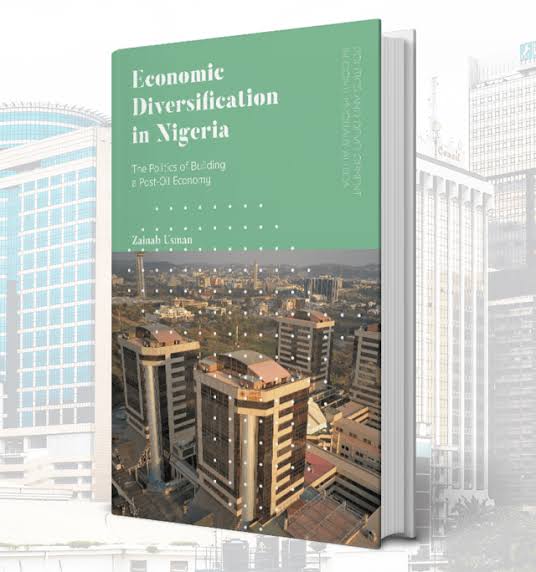
Author: Zainab Usman
Top Idea: Nigeria’s persistent failure to achieve broad-based economic diversification is not principally a failure to recognise what needs to be done. It is a failure to sustain the political coalitions, institutional capabilities, and policy commitments required to transform the structure of its economy.
The Big Idea
Nigeria’s difficulty in diversifying its economy cannot be adequately explained by its oil wealth, poor economic management, or an absence of development plans. Zainab Usman’s central argument is that the country’s economic choices are shaped by an unstable distribution of political power that encourages short-term reforms and crisis management but makes sustained structural transformation difficult.
In Economic Diversification in Nigeria, Usman attempts to explain a particularly troubling feature of Nigeria’s economic history. How a country can experience considerable economic expansion, develop successful non-oil industries, and undertake significant reforms without fundamentally transforming the productive foundations of its economy.
Her answer lies in the political conditions under which economic policy is made.
The book challenges the conventional resource-curse explanation by showing that petroleum dependence has not prevented every form of reform or economic development. Instead, successive governments have responded to different political pressures with selective interventions, sometimes achieving considerable success while failing to establish a durable national commitment to productive transformation.
Through historical analysis, sectoral comparisons, and the contrasting experiences of Lagos and Kano, Usman argues that economic diversification requires more than policies that encourage non-oil activity. It requires a political settlement capable of sustaining investment, strengthening administrative institutions, coordinating markets, and managing the distributional consequences of reform.
Her ultimate concern is therefore not simply how Nigeria can produce more goods outside the petroleum sector, but how its political system can support sustained economic transformation and shared prosperity.
Top Lessons
1. Economic growth is not the same as economic transformation.
Nigeria’s expansion in telecommunications, banking, financial services, and other non-oil activities demonstrates that meaningful economic progress has occurred.
Yet these achievements have not sufficiently reduced the country’s dependence on oil-related fiscal revenue and export earnings or fundamentally changed the productive structure of employment.
Usman makes an important distinction between growth in economic output and the deeper structural changes associated with diversification.
An economy may become larger without becoming sufficiently productive, resilient, or inclusive.
This distinction changes how economic success should be evaluated. The expansion of GDP is important, but it cannot substitute for evidence of export sophistication, productive employment, fiscal resilience, or sustained improvements in living standards.
2. Natural resources do not determine economic destiny.
The resource-curse literature provides important insights into the difficulties facing petroleum-dependent economies. Nevertheless, Usman argues that resource endowments alone cannot explain the considerable variation in Nigeria’s policy outcomes.
The same political economy that sustained petroleum dependence also permitted significant reforms in telecommunications and other sectors.
This suggests that political incentives, institutional arrangements, and the configuration of influential interests help determine when reforms become feasible.
Nigeria’s problem is therefore not that oil makes development impossible. It is that its political institutions have struggled to translate available resources and reform opportunities into sustained structural transformation.
3. Political incentives explain why technically desirable policies are not always implemented.
Economic policies create winners, losers, and competing claims over resources.
A government may recognise that a reform is economically beneficial while being unable or unwilling to bear its immediate political consequences.
Usman’s comparison of telecommunications liberalisation and downstream petroleum-sector reform is particularly revealing.
Fiscal pressures and opportunities for investment helped make telecommunications reform politically attractive. By contrast, fuel subsidy reform encountered resistance rooted in distributional pressures and the material dependence of households and businesses on affordable fuel.
The lesson is that policy feasibility cannot be determined from technical merit alone.
Reforms must be understood in relation to the interests they threaten, the constituencies they benefit, and the institutions available to manage their consequences.
4. Political stability and administrative capability reinforce one another.
Effective economic transformation requires institutions capable of maintaining policy direction beyond immediate political crises.
However, administrative capacity does not develop independently of politics.
Governments must possess incentives to strengthen institutions, invest in personnel, coordinate economic actors, and protect long-term programmes from repeated disruption.
The political environment can therefore encourage or undermine the very institutions expected to implement economic reforms.
This is an important qualification to the familiar argument that Nigeria simply needs stronger institutions. Institutional reform is itself a political undertaking.
5. Subnational political economies produce different developmental outcomes.
Usman’s comparison of Lagos and Kano demonstrates why Nigerian states should not be treated as economically or institutionally interchangeable.
Lagos benefited from political coalitions that supported relative policy continuity, revenue administration, and institutional development.
Kano, despite its substantial commercial and agro-industrial history, faced a different configuration of political pressures that constrained industrial revival.
These cases illustrate how political competition, inherited economic advantages, administrative capability, and relationships with the business community can shape divergent outcomes within a common federal system.
National policy matters, but the political and institutional conditions within individual states matter too.
6. Diversification must be a sustained political project, not a recurring government slogan.
Usman’s conclusion advances a broader agenda involving a more stable distribution of political power, a shared developmental vision, clearer priorities for structural transformation, and stronger public institutions.
She also argues for a capable state that coordinates, guides, and regulates markets rather than assuming that either state intervention or market liberalisation will independently deliver transformation.
Her central proposition is that diversification requires a durable political commitment capable of surviving immediate crises and competing distributional pressures.
The ultimate objective is not diversification as an abstract economic statistic, but productive transformation that supports shared prosperity.
My Notes
The distinction between economic activity and economic transformation
One of the most important contributions of this book is the discipline it introduces into how economic performance should be interpreted.
Nigeria’s economic experience is frequently presented through two competing narratives. One emphasises the country’s considerable commercial activity, entrepreneurship, financial services, and growing non-oil sectors. The other stresses its persistent vulnerabilities, weak productive capabilities, and dependence on petroleum revenues.
Usman’s argument helps explain why both narratives can contain elements of truth.
A country can expand commercially while retaining a narrow export structure. It can develop successful companies without establishing broad industrial capabilities. It can experience growth in services without generating sufficiently productive employment for its population.
The distinction between GDP diversification, export diversification, fiscal diversification, and wider structural transformation is therefore fundamental.
I find this particularly useful because it encourages a more precise assessment of economic progress.
The question should not merely be whether the non-oil economy is growing. It should also be whether that growth is creating capabilities that reduce vulnerability, improve productivity, strengthen public finances, and expand economic opportunities.
These outcomes are related, but they should not be assumed to move together.
The political economy of reform
Usman’s most persuasive analytical contribution lies in her examination of why some reforms succeed while others repeatedly stall.
It is easy to explain economic underperformance by invoking corruption, incompetence, poor leadership, or weak institutions. These explanations may identify genuine problems, but they often fail to explain variation.
If the same country can successfully liberalise telecommunications while repeatedly struggling to reform petroleum pricing, what accounts for the difference?
Usman’s political-settlements framework directs attention to the distribution of power, the interests of political actors, and the constraints that shape government decisions.
The telecommunications case illustrates how economic pressures and opportunities for influential investors can align in favour of reform.
The petroleum case demonstrates the opposite difficulty. Reforming subsidies has consequences for households, transport, electricity generation, and the broader cost of economic activity. Resistance cannot be understood exclusively as ignorance or opposition to efficiency.
The absence of reliable public services can make an inefficient policy appear indispensable to those who depend on it.
What I take from this is a clearer appreciation of the relationship between economic policy and political legitimacy.
A reform may be economically justified but politically unsustainable if its implementation imposes immediate costs on vulnerable groups without credible compensating measures.
At the same time, the book raises a further question on how governments can construct coalitions around productivity-enhancing reforms without merely replacing one form of elite advantage with another?
The example of politically connected industrial enterprises is particularly relevant.
State support can facilitate investment and the development of domestic productive capabilities. But it can also create privileged market positions, weaken competition, and concentrate economic opportunities.
The test should therefore be whether public intervention generates demonstrable productive capabilities, competitive performance, and wider economic benefits.
Political feasibility is necessary, but it is not sufficient evidence of developmental effectiveness.
Sub-National Institutions – Political institutions are not interchangeable
The Lagos–Kano comparison is one of the book’s most illuminating features.
It moves the analysis away from an exclusively federal understanding of Nigeria’s development problems.
Usman presents Lagos as a case in which political coalitions, administrative reforms, revenue mobilisation, and a measure of policy continuity helped support economic development.
Her explanation is especially interesting because the political incentives behind reform were not necessarily altruistic. Pressures arising from urban expansion, fiscal difficulties, political competition, and threats to incumbent authority contributed to a governing coalition’s interest in strengthening institutions.
Kano presents a contrasting experience.
Despite its commercial traditions and substantial agro-industrial potential, successive political pressures did not produce an equally durable coalition focused on industrial transformation. Usman’s account includes the political mobilisation surrounding the extension of Sharia law in the early democratic period, tensions between political and business interests, and difficulties sustaining a coherent industrial strategy.
The comparison is instructive, but I would be cautious about drawing overly simple conclusions.
Lagos possesses geographical, infrastructural, financial, and historical advantages that cannot be replicated automatically by other states. Kano’s economic trajectory also reflects broader forces of industrial competition and deindustrialisation.
Political coalitions may help explain the difference, but their effects must be assessed alongside these structural conditions.
I would therefore interpret Lagos as evidence that political incentives can support institutional development, not as proof that its governance arrangements alone account for its relative economic position.
The broader lesson is that successful subnational development strategies must begin with an understanding of each state’s actual economic structure, institutional capabilities, and political constraints.
The role of the state in economic transformation
Usman’s argument is not simply that politics prevents markets from functioning efficiently. She takes a stronger position. Successful economic transformation requires a capable state that can coordinate economic activity, address market failures, provide public goods, and guide the development of productive capabilities.
This position places her within a longstanding debate about the developmental role of government.
I find the argument persuasive to the extent that markets require functioning institutions, infrastructure, enforceable rules, and mechanisms for coordinating investments that private actors cannot always undertake independently.
However, state intervention must be distinguished from state effectiveness.
The ability to announce industrial priorities or provide preferential treatment does not necessarily establish the capacity to identify productive investments, monitor performance, correct mistakes, or withdraw support from unsuccessful enterprises.
A state capable of directing markets must also possess mechanisms through which its own decisions are evaluated and disciplined.
This is where I would place greater emphasis than the book’s broad institutional prescription alone might suggest.
The question is not simply whether government should intervene, but which specific capabilities, information systems, incentives, and accountability mechanisms make intervention developmental.
Where the argument remains open to challenge
My first reservation concerns the explanatory flexibility of political-settlements analysis.
Usman’s framework is compelling because it recognises the complexity of political and economic relationships. However, that flexibility can make it difficult to distinguish an explanation established through evidence from one constructed retrospectively around an observed outcome.
When reforms succeed, supportive coalitions can be identified. When they fail, political fragmentation and conflicting interests can be emphasised.
The framework becomes more powerful when its proposed mechanisms generate expectations that can be tested against competing explanations.
This would require specifying more precisely how different configurations of political power affect policy continuity, institutional investment, implementation performance, and eventual economic outcomes.
A second reservation concerns the relationship between political stability and inclusive development.
A stable ruling coalition may improve administrative coordination and increase government revenue. Yet these achievements do not automatically produce better employment, reduced inequality, or improved welfare.
Political continuity can protect productive institutions, but it can also protect entrenched interests.
The distinction matters because the capacity to sustain policy is not necessarily the capacity to sustain good policy.
My third reservation concerns Usman’s proposal to formalise Nigeria’s zoning or rotational power-sharing arrangement within the constitutional order.
Her reasoning is understandable. A more predictable distribution of high political office might reduce destabilising competition among elites and support the continuity required for development.
Nevertheless, I remain unconvinced that constitutionalising rotational power-sharing would necessarily produce a more developmental political settlement.
It might improve perceptions of inclusion and reduce some forms of uncertainty. But it could also reinforce bargaining over access to office without changing the incentives governing public administration, resource allocation, and performance.
A durable distribution of political offices should not be confused with a durable commitment to productive transformation.
For such an arrangement to contribute meaningfully to development, it would need to operate alongside credible institutions that reward competence, protect accountability, and sustain effective economic policy.
I therefore find Usman’s diagnosis of political instability more convincing than the sufficiency of this particular institutional remedy.
What the book added to my understanding
The most important shift in my thinking is from asking what economic policies Nigeria requires to asking what political and institutional conditions would make those policies durable and effective.
The distinction is consequential.
Identifying an efficient reform is not equivalent to designing a feasible reform. Securing political agreement is not equivalent to creating administrative capability. Achieving policy implementation is not equivalent to demonstrating positive economic outcomes.
Each represents a different problem requiring its own evidence.
Usman’s argument also strengthens my understanding of development as a process shaped by relationships between institutions, markets, and households.
Political incentives influence public investment and institutional performance. Institutions influence how markets operate. Market structures and government decisions influence the economic choices available to households and enterprises. Those outcomes can, in turn, shape political demands and the distribution of power.
This is not a causal model established in its entirety by Usman’s book. It is the broader analytical perspective her argument encourages me to examine.
I also take from the book a more demanding understanding of state capacity.
State capacity should not be treated as a single national characteristic or inferred solely from administrative structure. It must be examined through specific functions, institutions, and outcomes.
A government may possess considerable revenue-collection capability while struggling with industrial coordination. Another may deliver selected services effectively without establishing the institutional foundations for sustained economic transformation.
These differences deserve careful measurement.
Ultimately, the book changes the questions I would ask of Nigerian economic policy.
Rather than stopping at whether a policy is desirable, I would want to understand the political incentives behind its adoption, the administrative capabilities available for implementation, the distribution of costs and benefits, and the evidence required to determine whether it has achieved its stated objectives.
Key Takeaways for the Nigerian Condition
1. Economic diversification needs an operational definition.
Nigeria cannot adequately assess diversification through announcements of new programmes, investment commitments, or growth in non-oil GDP alone.
A credible framework should distinguish changes in production, exports, fiscal revenue, employment, productivity, and household welfare.
This would make it possible to separate genuine structural progress from improvements in selected headline indicators.
2. Policy continuity must be accompanied by accountability.
Nigeria needs economic strategies that survive changes in political leadership.
However, continuity should not mean preserving ineffective programmes merely because they have political sponsors.
Long-term commitments should be accompanied by measurable milestones, independent evaluation, and mechanisms for correcting policies that fail.
3. State governments require differentiated development strategies.
The Lagos–Kano comparison demonstrates the limitations of assuming that one administrative or industrial model can serve every Nigerian state equally.
States differ in infrastructure, productive capabilities, fiscal conditions, market access, labour skills, and political institutions.
Their strategies should reflect these differences while recognising the importance of trade, transport, and coordination across state boundaries.
4. Food security and agricultural transformation must be understood within the wider political economy.
Agricultural development cannot be reduced to increasing crop production.
Market access, rural infrastructure, storage, processing, logistics, electricity, security, finance, and the effectiveness of public institutions determine whether agricultural production can translate into higher productivity and more reliable food supplies.
Usman’s framework encourages an examination of why governments may support highly visible agricultural interventions while underinvesting in the less visible institutional and market systems required for sustained transformation.
This is an application of her broader argument, rather than a claim that the book itself provides an empirical account of every component of Nigeria’s food system.
5. Reform should be evaluated through its distributional consequences.
Fuel pricing, taxation, trade restrictions, public investment, and industrial policy affect different groups in different ways.
An economically desirable reform may impose immediate costs on households or enterprises while its longer-term benefits remain uncertain.
Governments therefore require credible transitional arrangements and the administrative capability to implement them.
Failure to account for these realities can undermine both the legitimacy and durability of reform.
6. Political inclusion must produce institutional effectiveness.
A more stable distribution of political power may be important in a diverse federation.
Nevertheless, political accommodation should ultimately support institutions capable of implementing policy, providing public goods, regulating markets, and sustaining development.
The allocation of public office is only one component of that challenge.
A functioning developmental settlement must connect political inclusion with competence, accountability, and productive economic outcomes.
7. Nigeria needs to evaluate whether reforms actually transform productive capabilities.
The ultimate test of diversification should not be whether government has introduced a policy or whether a politically influential enterprise has expanded.
It should be whether the economy becomes more capable of producing competitive goods and services, generating productive employment, supporting sustainable public finances, and improving welfare.
That distinction would make Nigeria’s development debate considerably more substantive.
My Final Assessment
Zainab Usman’s Economic Diversification in Nigeria is an important contribution to understanding the relationship between political power, economic policy, and structural transformation.
Its principal achievement is not establishing that Nigeria needs to diversify its economy. That proposition is widely accepted and has appeared in national development plans for decades.
The book’s contribution is explaining why a country that recognises the need for diversification, possesses considerable economic resources, and has successfully implemented important sectoral reforms has struggled to sustain broader productive transformation.
Usman demonstrates that political constraints matter, that economic reforms generate different coalitions of support and resistance, and that subnational institutions can produce substantially different developmental outcomes.
Her interpretation is strongest where historical evidence and comparative cases explain the political incentives behind specific policy choices.
I am less persuaded that all the institutional prescriptions advanced in the conclusion necessarily follow from the diagnosis, particularly the proposed constitutional formalisation of rotational power-sharing.
But this reservation does not diminish the book’s central achievement.
It provides a more rigorous way of thinking about why technically desirable reforms may remain politically infeasible, institutionally fragile, or insufficient to transform the productive structure of an economy.
For students of political economy, public administrators, policymakers, researchers, and readers concerned with Nigeria’s development, this is an intellectually valuable book.
Its enduring lesson is that economic transformation requires more than knowing what to do. It requires understanding who has the power to act, what incentives shape their decisions, which institutions can sustain implementation, and whether the resulting policies actually improve productive capabilities and human welfare.
That is what I take most seriously from Usman’s argument.
Keep the conversation open.
Essays, reading notes and public commentary on food, households, markets, institutions, public service and leadership.
Subscribe to receive new essaysExplore more writing