
The Accidental Public Servant
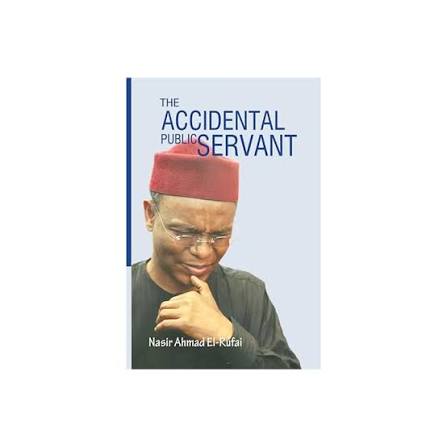
Author: Nasir Ahmad El Rufai
Top Idea: Reforming government requires more than technical competence, political access and personal determination. The ability to change public institutions depends on the authority a reformer possesses, the interests affected by proposed changes, the rules governing the exercise of power and the consequences of those decisions for the people government is expected to serve.
The Big Idea
Political power is frequently discussed through the public decisions of presidents, ministers and senior government officials. Much less is known about the private relationships, institutional negotiations and administrative circumstances through which those decisions emerge.
In The Accidental Public Servant, Nasir Ahmad El Rufai attempts to explain these processes through his experiences within the Nigerian government between 1998 and 2007.
The memoir traces his movement from a professional career in quantity surveying and business into public administration, first through his involvement in the transition from military government and subsequently through appointments in President Olusegun Obasanjo’s administration.
His two principal responsibilities were at the Bureau of Public Enterprises and the Federal Capital Territory.
At the Bureau of Public Enterprises, El Rufai participated in the implementation of Nigeria’s privatisation and economic reform programme. As Minister of the Federal Capital Territory, he exercised authority over land administration, urban development, public property and the implementation of Abuja’s planning regulations.
These responsibilities placed him within important political and administrative relationships during the early years of Nigeria’s Fourth Republic.
The book’s title reflects his account of a professional journey shaped partly by opportunities and circumstances he had not originally anticipated. However, the narrative also reveals the importance of educational background, professional preparation, personal relationships and access to influential individuals.
His entry into government may have involved unexpected opportunities, but his subsequent influence cannot be explained by chance alone.
Throughout the memoir, El Rufai presents himself as a technically oriented administrator who sought to introduce greater discipline, transparency and consistency into institutions affected by political interference and established privileges.
He describes conflicts with powerful political actors, difficulties implementing reforms and experiences that contributed to his eventual separation from government.
The book also provides his interpretation of major political developments within the Obasanjo administration, including the relationship between the president and Vice President Atiku Abubakar, the controversy surrounding proposals for a third presidential term and the political transition of 2007.
These episodes make the memoir more than an account of administrative work.
It is also a narrative about access to political power, personal loyalty, institutional authority and the consequences of attempting to exercise public office within a contested political environment.
Nevertheless, the book must be understood as a personal account.
El Rufai writes as a participant in the events he describes. His experiences provide valuable information about government operations, but his interpretation of those events is not equivalent to an independently verified history.
His explanations of reform decisions, political disagreements and the behaviour of other officials require scrutiny against the available evidence and competing accounts.
The memoir’s central contribution is therefore not that it establishes the definitive history of the Obasanjo administration.
It is that it opens aspects of government decision making to examination through the experiences of an individual who occupied significant administrative positions.
Its enduring question concerns the relationship between the desire to reform institutions and the legitimate, effective and accountable exercise of public power.
Top Lessons
1. Access to government depends on more than professional competence.
El Rufai’s professional development illustrates the importance of education, technical ability and experience in preparing individuals for public responsibilities.
His background in quantity surveying and private business provided skills relevant to administrative management, property valuation and the economic dimensions of public policy.
However, his movement into government also depended on relationships and opportunities within influential professional and political networks.
His education at Barewa College and his subsequent relationships with individuals occupying important public positions feature prominently in his account.
This creates an important distinction.
Professional competence may prepare an individual to perform public responsibilities, but access to those responsibilities may be influenced by personal connections and political circumstances.
The two are not necessarily mutually exclusive.
An individual may possess relevant qualifications while also benefiting from privileged access to decision makers.
The lesson is that recruitment into public office should be examined through both competence and the institutional procedures governing selection.
The existence of a capable officeholder does not independently establish that the appointment process was sufficiently open or meritocratic.
2. Privatisation involves political decisions as well as economic calculations.
El Rufai’s experience at the Bureau of Public Enterprises occupies an important part of the memoir.
His account examines the attempt to reform public enterprises whose performance, financial obligations and administrative arrangements had become significant concerns for government.
Privatisation was presented as one means of improving economic efficiency, attracting investment and reducing the burden associated with government ownership of commercial enterprises.
However, decisions about the ownership and management of public assets necessarily involve competing interests.
Public enterprises may provide employment, services, commercial opportunities and access to resources for different groups.
Their sale or restructuring can therefore redistribute economic power.
The memoir’s account of political interference and disputes over privatisation illustrates why such programmes cannot be understood exclusively as technical exercises.
Nevertheless, the existence of political resistance does not establish that every privatisation decision was beneficial.
The quality of a transaction depends on the process through which assets are valued, buyers are selected, contractual obligations are established and subsequent performance is monitored.
A transparent process may reduce opportunities for abuse, but the ultimate economic effects still require investigation.
The important lesson is that privatisation must be evaluated through its design, implementation and consequences, rather than through assumptions that public or private ownership necessarily produces superior outcomes.
3. Public authority is shaped by political relationships.
The memoir provides extensive accounts of El Rufai’s relationships with President Obasanjo, Vice President Atiku Abubakar and other influential officials.
These relationships affected the circumstances in which he performed his administrative responsibilities.
Political support can help officials overcome bureaucratic obstacles, secure resources and obtain approval for difficult decisions.
However, dependence on powerful patrons can also create vulnerabilities.
An official whose authority relies heavily on the confidence of an individual political leader may find that authority weakened when relationships change.
The memoir demonstrates how cooperation, disagreement, loyalty and personal access can become important elements of government administration.
Yet personal relationships should not be confused with legitimate institutional authority.
A public official’s responsibilities should be established through law and appropriate administrative procedures.
The broader lesson is that government institutions become vulnerable when their effectiveness depends excessively on personal relationships rather than predictable rules.
4. Enforcement of public rules must be distinguished from the fairness of their implementation.
El Rufai devotes considerable attention to his administration of the Federal Capital Territory.
His account presents the enforcement of Abuja’s development regulations and the restoration of the city’s master plan as important components of his reform programme.
He discusses land administration, the sale of government houses, development control and the demolition of structures considered inconsistent with planning requirements.
These decisions raise important questions about government authority.
Urban planning requires enforceable rules.
Land administration also requires reliable records, predictable procedures and mechanisms for preventing arbitrary allocation.
However, the legitimacy of enforcement depends on more than the existence of a planning regulation.
Authorities must establish that decisions are lawful, that affected individuals receive appropriate notice and that legitimate procedures for appeal and remedy are available.
The circumstances of Abuja’s demolition exercises generated substantial criticism from organisations concerned with housing rights and forced evictions.
Consequently, the enforcement of planning rules and the protection of affected residents should be assessed together.
The important lesson is that administrative decisiveness does not independently establish administrative justice.
5. Political influence can increase the capacity to act without guaranteeing institutional accountability.
El Rufai’s experience demonstrates the advantages that can accompany access to senior political leadership.
Such access may enable an official to obtain decisions quickly and overcome administrative delays.
However, the concentration of practical authority also creates questions about oversight.
Who reviews the decisions of an influential minister?
What procedures govern the allocation of public assets?
How are conflicts of interest identified?
What safeguards prevent personal relationships from determining official outcomes?
These questions are especially important where decisions involve valuable land, public property or commercial assets.
The lesson is that administrative effectiveness should not depend on the absence of scrutiny.
Strong public institutions require both the authority to act and the mechanisms necessary to hold that authority accountable.
6. Political memoirs are valuable evidence, but they are not neutral records.
One of the book’s important contributions is its willingness to discuss political relationships and administrative controversies that might otherwise remain poorly documented.
Personal accounts can help historians and researchers understand how public officials perceived events and why they believed particular decisions were necessary.
However, memoirs are shaped by memory, perspective and the author’s choice of what to include.
Participants may possess detailed knowledge of their own actions without knowing the motives of everyone involved.
They may also interpret earlier events through the consequences that became apparent only later.
El Rufai’s descriptions of his conflicts with political figures were publicly disputed following the book’s publication.
These disagreements illustrate the need to examine competing testimonies rather than treating one account as final.
The lesson is that political memoirs should be read as important historical sources whose claims remain open to verification.
My Notes
The accidental nature of political opportunity deserves closer examination.
The title of the memoir is one of its most interesting features.
El Rufai presents his entry into public service as an unexpected development in a professional life that had already produced considerable private sector success.
The idea of accidental public service suggests that capable individuals may enter government through circumstances they did not originally plan.
However, I would distinguish unexpected opportunity from random selection.
El Rufai’s account includes a strong educational background, professional qualifications, commercial experience and relationships with individuals who later occupied influential positions.
These circumstances helped establish the conditions under which opportunities could arise.
The distinction matters because it changes how the narrative should be interpreted.
If capable individuals enter government primarily through personal relationships, the resulting administration may occasionally benefit from their expertise.
Nevertheless, such a system does not guarantee that equally capable individuals without similar connections will receive comparable opportunities.
The success of a particular appointment therefore cannot independently justify the selection arrangements through which it occurred.
What I take from this is a question about institutional recruitment.
A government should not need to rely primarily on fortunate personal encounters to identify competent individuals.
It should possess credible procedures for discovering, assessing and appointing people with the capabilities required for public responsibilities.
The difference between technical competence and political judgement.
El Rufai’s professional background occupies an important place in the memoir.
His training in quantity surveying provided knowledge relevant to construction, valuation and commercial decision making.
His subsequent responsibilities at the Bureau of Public Enterprises and the Federal Capital Territory exposed him to wider questions of public policy and political administration.
However, technical competence and political judgement are different capabilities.
A technically defensible decision may have distributional consequences that require broader examination.
An economically attractive reform may impose substantial transitional costs.
An administrative measure intended to improve compliance may undermine public confidence if affected individuals believe that decisions are arbitrary or remedies are unavailable.
Political judgement requires an understanding of these wider consequences.
This does not mean that technical standards should be compromised whenever a decision becomes unpopular.
It means that public officials must distinguish the technical justification for a policy from the institutional conditions required for its legitimate implementation.
I find this distinction particularly important because the memoir presents several episodes in which professional determination encounters political resistance.
The existence of resistance does not automatically demonstrate that the administrator was correct.
The merits of the decision and the reasons for opposition must be examined separately.
Privatisation should be evaluated through outcomes rather than reformist intentions.
The Bureau of Public Enterprises provides one of the clearest opportunities for assessing the relationship between reform objectives and economic outcomes.
The argument for privatisation often begins with the weaknesses of government owned enterprises.
These may include inefficient management, political interference, persistent financial losses and inadequate investment.
Such difficulties can provide legitimate reasons for considering changes in ownership or commercial arrangements.
However, they do not establish that every transfer of ownership will improve performance.
Privatisation can fail where assets are transferred through compromised procedures, where buyers lack sufficient capability or where competition and regulatory oversight remain weak.
A government may also receive immediate revenue from a sale without securing durable improvements in the services previously provided by the enterprise.
The relevant assessment should therefore distinguish the transaction from its economic consequences.
Did the enterprise subsequently improve its performance?
Were investments made?
Did service quality improve?
What happened to employment?
Did government reduce its financial obligations?
Were consumers protected against excessive market power?
These questions cannot be answered through the reformer’s personal account alone.
They require transaction records, performance evidence and appropriate comparisons.
El Rufai’s account provides insight into the decisions and disputes surrounding reform.
Its value would become greater when individual claims are examined alongside evidence of the outcomes achieved.
Abuja raises the question of what successful administration means.
The chapters concerning Abuja are among the memoir’s most consequential.
El Rufai presents his administration as an effort to establish greater order in land allocation, urban development and the management of the Federal Capital Territory.
These concerns were not inherently illegitimate.
A city requires functioning planning institutions and predictable land administration.
Uncontrolled development can create infrastructure difficulties, environmental risks and conflicts over land use.
Government therefore possesses legitimate responsibilities for enforcing planning requirements.
However, the social consequences of enforcement deserve the same seriousness as the administrative objectives.
The demolition exercises undertaken during El Rufai’s tenure were controversial.
The Centre on Housing Rights and Evictions and the Social and Economic Rights Action Centre reported large scale displacement associated with the enforcement of Abuja’s planning arrangements between 2003 and 2007.
Their findings raised concerns about consultation, notice, compensation and the treatment of residents whose homes were affected.
A responsible examination should consider these concerns without assuming that every structure demolished was legally authorised.
The legal status of particular properties and the procedural rights of their occupants are distinct questions.
Even where a structure violates planning regulations, the authorities remain responsible for exercising their powers lawfully.
This distinction changes how administrative success should be evaluated.
The number of structures removed does not establish that planning enforcement was effective or just.
A more complete assessment would examine compliance with the law, the treatment of affected households, the availability of remedies and the long term consequences for urban development.
I regard this as one of the most important questions raised by the memoir.
Government effectiveness cannot be measured exclusively through the speed or visibility of official action.
It must also consider whether that action respects legitimate rights and produces defensible public outcomes.
Land allocation and government housing sales require stronger institutional safeguards.
El Rufai’s account of land reform and the sale of government houses raises another important issue.
Land and public property are valuable resources.
Their allocation can create substantial private benefits.
Consequently, the procedures governing these decisions must be particularly credible.
A minister may exercise lawful authority over land administration while still operating within arrangements that permit excessive discretion.
The concentration of authority does not automatically establish misconduct.
Nevertheless, it creates risks that require appropriate safeguards.
A credible system should provide clear allocation criteria, reliable records, transparent procedures and opportunities for review.
The sale of government properties raises similar questions.
Public assets should be valued through defensible methods.
Eligibility requirements should be clear.
Potential conflicts of interest should be identified and addressed.
The public should be able to understand how decisions were made and whether the government obtained appropriate value.
I would therefore distinguish the reform of administrative procedures from the more demanding task of establishing institutions capable of constraining the discretion of future officeholders.
A reform that depends on the personal integrity of one administrator remains vulnerable when leadership changes.
A stronger reform changes the rules governing everyone who subsequently occupies that office.
The author is an important witness to political power, but not its final interpreter.
The memoir contains accounts of significant disagreements involving President Obasanjo, Vice President Atiku Abubakar and other senior officials.
These episodes offer an unusual perspective on the relationships operating within the federal executive.
They also require careful scrutiny.
The fact that El Rufai participated in particular events gives his testimony historical importance.
However, participation does not provide complete knowledge of every decision, conversation or motive.
His account of disagreements surrounding privatisation was challenged by Atiku Abubakar’s representatives after publication.
The existence of these conflicting interpretations does not establish that either account is entirely correct.
It establishes the need for additional evidence.
Relevant material would include official correspondence, institutional records, contemporaneous statements and testimony from other participants.
The same standard should apply to allegations concerning the motives of political actors.
A memoir may report what an author believed or witnessed.
It cannot independently establish another person’s private intentions.
I would therefore read the book as one participant’s detailed interpretation of events within government.
Its value lies in the information and questions it contributes to historical inquiry, not in an exemption from scrutiny.
The Third Term controversy and the limits of executive reform.
The memoir’s treatment of the controversy surrounding proposals for a third presidential term is important to its wider account of political power.
It places administrative reform within the political tensions that characterised the later years of the Obasanjo administration.
These events raise questions about the relationship between executive authority, constitutional rules and political ambition.
However, the broader lesson should not depend on accepting every allegation concerning the actions or motives of particular individuals.
The controversy illustrates the importance of institutions capable of constraining the exercise of political power.
It also raises questions about the position of technocrats who serve within governments experiencing serious political disputes.
At what point does professional cooperation become participation in a contested political project?
What responsibility does an appointed official possess when legitimate administrative work occurs alongside decisions that raise concerns about constitutional accountability?
These questions deserve examination because the distinction between technocrat and political actor can become blurred.
A minister exercising substantial executive authority is not merely an external professional providing neutral advice.
The minister participates in government decisions and bears responsibilities associated with that office.
Technical competence does not eliminate political accountability.
The 2007 elections expose a question about institutional responsibility.
El Rufai’s account of the final period of the Obasanjo administration also invites consideration of the 2007 political transition.
The elections conducted that year were criticised by domestic and international observers.
The European Union Election Observation Mission documented serious shortcomings involving electoral administration, transparency, irregularities and fraud.
These findings are relevant to the historical circumstances in which El Rufai’s government service ended.
However, they should not be used to assign individual responsibility without specific evidence.
The appropriate question is whether the memoir provides sufficient information about the author’s responsibilities and involvement in the political processes surrounding the transition.
Chidi Anselm Odinkalu raised a similar issue in his contemporary review of the book, noting the need for greater clarity regarding El Rufai’s account of his relationship with electoral administration.
This is a legitimate subject for historical inquiry.
It should be examined through the author’s testimony and independent records rather than through assumptions arising from his proximity to political power.
The memoir’s greatest strength is also its principal limitation.
El Rufai writes from inside the institutions he describes.
This makes his account valuable.
He can discuss professional relationships, administrative responsibilities and political disagreements from the perspective of someone who participated in them.
Yet that proximity also shapes the narrative.
The author has reasons to explain his decisions, defend his professional reputation and present his understanding of controversial events.
These are normal characteristics of political autobiography.
They do not invalidate the account.
They require the reader to distinguish recollection from corroboration and justification from demonstrated effectiveness.
I would have liked a more systematic distinction between the author’s reform objectives and the outcomes independently established by the available evidence.
I would also examine whether the memoir gives sufficient attention to decisions he subsequently reconsidered, occasions when criticism was justified and circumstances in which his own approach may have contributed to administrative difficulties.
Such reflection can make political autobiography more illuminating.
A convincing account of public service should explain not only what the author believes was accomplished, but also what experience revealed about the limitations of the author’s judgement.
What the book added to my understanding
The most important contribution I take from The Accidental Public Servant is a more concrete understanding of how political relationships influence the administration of government.
Public institutions operate through formal laws, established responsibilities and administrative procedures.
However, actual decisions may also depend on personal access, political confidence, institutional rivalry and the ability of particular officials to obtain support.
The memoir makes these relationships visible.
It also strengthens my understanding of the distinction between administrative determination and institutional effectiveness.
A public official may pursue reform with considerable energy without establishing that the reform was implemented fairly or produced the intended results.
Professional courage and public accountability must therefore be examined together.
A third lesson concerns the nature of political access.
The appointment of competent individuals through influential relationships may occasionally produce valuable administrative contributions.
Nevertheless, the wider institutional question is whether government possesses credible procedures for identifying capable people beyond established networks.
A fourth lesson concerns the relationship between personal integrity and institutional safeguards.
A reformer may sincerely oppose corruption while exercising authority through arrangements that remain excessively dependent on individual discretion.
The stronger institutional achievement is to establish transparent rules and accountability mechanisms that continue to operate after the reformer leaves office.
Finally, the book reinforces the importance of reading political memoirs critically.
Their value comes from the information they preserve, the perspectives they reveal and the questions they permit subsequent researchers to investigate.
They should neither be dismissed because the author is controversial nor accepted simply because the author exercised public office.
The central lesson I carry forward is that public service must be assessed through the relationship between legitimate authority, administrative capability, institutional accountability and demonstrable outcomes.
Key Takeaways for the Nigerian Condition
1. Public appointments should be supported by credible recruitment procedures.
Nigeria should develop institutions capable of identifying and appointing competent individuals without depending excessively on personal relationships.
Relevant qualifications, professional experience, integrity requirements and the responsibilities of each office should inform selection.
Political appointments will continue to involve legitimate political discretion.
However, that discretion should operate within transparent standards appropriate to the offices concerned.
2. Economic reforms should be evaluated through their outcomes.
Privatisation, commercialisation and other economic reforms should not be judged simply by the completion of transactions or the announcement of new policies.
Assessment should include the quality of implementation, financial consequences, changes in enterprise performance, market competition and the effects on workers and consumers.
Independent evaluation can help distinguish successful reform from administrative activity.
3. Urban development must combine planning enforcement with procedural fairness.
Government has legitimate responsibilities for managing land use, infrastructure and development control.
However, enforcement should operate through lawful procedures that protect appropriate rights and provide credible opportunities for review.
The consequences for affected residents should form part of any assessment of planning policy.
The speed or scale of enforcement is not sufficient evidence of success.
4. Land administration requires institutional controls over discretion.
Land allocation, property registration and the management of government assets involve resources with considerable economic value.
Their administration should be governed by clear criteria, accurate records, transparent procedures and effective oversight.
A system that depends primarily on the integrity of a particular officeholder remains institutionally vulnerable.
5. Technocratic authority should remain subject to public accountability.
Technical expertise can improve the quality of government decisions.
However, it does not provide an exemption from legal requirements, procedural fairness or independent scrutiny.
The decisions of appointed experts should be evaluated through the same institutional standards that govern other public officials.
6. Government reforms should survive changes in leadership.
The value of an administrative reform depends partly on whether its procedures and capabilities remain effective after the official responsible for introducing it leaves office.
Public institutions should preserve records, establish clear responsibilities and maintain credible implementation arrangements.
Continuity should depend on organisational systems rather than individual influence.
7. Political memoirs should contribute to institutional history.
Nigeria’s understanding of its political development would benefit from properly documented accounts by individuals who participated in major government decisions.
Such memoirs can reveal information unavailable in official reports.
However, their claims should be examined alongside documentary records and alternative testimony.
The objective should be a richer historical understanding, not the substitution of personal narratives for independent evidence.
8. Food security and economic reform require the same distinction between action and outcomes.
The lessons of the memoir extend to other areas of government responsibility, including agricultural development and food security.
An intervention may be politically visible without producing lasting improvements in market functioning or household welfare.
Similarly, an institution may implement activities successfully without achieving the wider objectives assigned to it.
The appropriate assessment should identify the mechanism through which a policy is expected to operate and examine evidence of its consequences.
This application extends the book’s institutional questions rather than suggesting that El Rufai’s memoir directly studies food systems.
9. Public service should be evaluated through competence, legitimacy and results.
A credible understanding of government performance requires more than admiration for determined officials or criticism of unpopular decisions.
It should examine whether public authority was exercised lawfully, whether institutions possessed the capability to carry out their responsibilities and whether the resulting actions served defensible public objectives.
These standards should apply regardless of the political identity or professional reputation of the officeholder.
My Final Assessment
Nasir Ahmad El Rufai’s The Accidental Public Servant provides a detailed personal account of political relationships, administrative reform and the exercise of executive authority during an important period of Nigeria’s Fourth Republic.
Its principal contribution lies in making aspects of government administration accessible through the experiences of someone who participated directly in significant economic and political decisions.
The memoir’s treatment of privatisation, Abuja’s administration and political relationships within the Obasanjo government provides material for understanding the opportunities and constraints experienced by appointed public officials.
Its accounts also demonstrate how professional responsibilities can become entangled with political loyalty, personal access and disputes over institutional authority.
However, the book should not be treated as a definitive history of the period.
Its descriptions of political disagreements are influenced by the author’s position within those events.
Some claims were publicly contested, while the consequences of important administrative decisions require independent evaluation.
The Abuja demolition exercises particularly demonstrate why official reform objectives must be assessed alongside the rights and experiences of affected residents.
Similarly, the success of privatisation or administrative restructuring cannot be established solely through the intentions or personal testimony of those responsible for implementation.
These reservations do not eliminate the historical value of the memoir.
They clarify how it should be read.
For students of Nigerian political history, public administrators, researchers and readers interested in the practical exercise of government authority, the book offers a substantial account of the relationships and difficulties that can shape public service.
Its most useful contribution is not a conclusive judgement about the author or the individuals with whom he worked.
It is the opportunity to examine how administrative expertise, political influence, personal judgement and institutional arrangements interact within government.
The most important lesson I take from The Accidental Public Servant is that the determination to reform government must be distinguished from the legitimate and effective exercise of public authority.
Professional competence matters. Political access matters. Administrative determination matters.
But none of these independently establishes that a reform is lawful, fair or beneficial.
The enduring standard must be whether public institutions acquire the capability to perform their responsibilities consistently, accountably and in ways that produce defensible public outcomes.
That is the central question El Rufai’s memoir helps bring into focus, even when his own interpretation of particular events remains open to disagreement.
Keep the conversation open.
Essays, reading notes and public commentary on food, households, markets, institutions, public service and leadership.
Subscribe to receive new essaysExplore more writing