
The Unending Quest for Reform
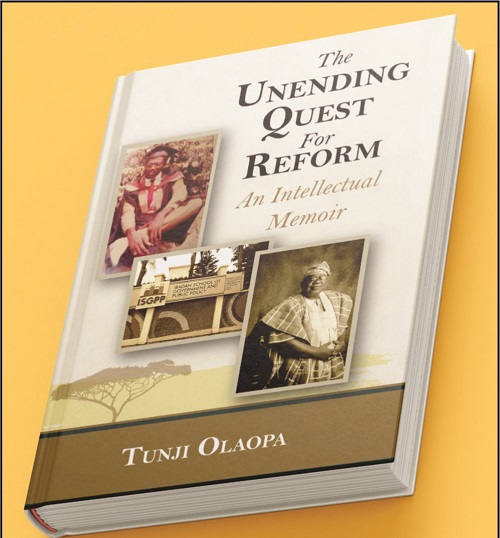
Author: Tunji Olaopa
Top Idea: The pursuit of institutional reform requires more than intellectual conviction, professional competence and a commitment to public service. It also requires an understanding of the political interests, organisational incentives and institutional constraints that determine whether reform proposals can survive implementation. Through his personal and professional experiences, Tunji Olaopa demonstrates the difficulties of pursuing administrative transformation from within a system whose established practices may resist the very changes reformers seek to introduce.
The Big Idea
Public administration is frequently examined through policies, institutional structures, reform commissions and the performance of government organisations. Considerably less attention is devoted to the individuals who work within those institutions, develop reform ideas and attempt to translate them into administrative practice.
In The Unending Quest for Reform: An Intellectual Memoir, Tunji Olaopa approaches the history of Nigerian public administration through his intellectual development, personal experiences and professional career.
His purpose is not simply to recount the positions he occupied or the events that shaped his life. He attempts to explain how his understanding of Nigeria’s political and administrative difficulties developed, why he became committed to reform and what his experience revealed about the possibilities and limitations of institutional change.
The memoir begins with his formative experiences in Okeho and Aawe in Oyo State. Olaopa describes the influence of family, community, education, religion and books on his intellectual development.
His encounter with the political violence that accompanied the Western Region crisis of the 1960s became an important part of his subsequent questioning of political authority and social order.
The writings of Plato and other political thinkers helped him develop a framework for examining the relationship between knowledge, justice and the organisation of political communities.
His education at the University of Ibadan subsequently provided opportunities to deepen these intellectual interests.
However, the book does not present his development as an uninterrupted progression towards professional success.
Olaopa discusses personal difficulties, academic disappointments, religious questions and the responsibilities of family life. These experiences form part of his explanation of how intellectual commitments and personal values developed over time.
The second major part of the memoir concerns his movement into public administration.
His early professional experience included work with the Directorate for Social Mobilisation, commonly known as MAMSER, before his subsequent responsibilities in the Presidency and the federal civil service.
Through these appointments, Olaopa encountered the practical difficulties of public administration and developed an increasingly elaborate philosophy of institutional reform.
He describes efforts to improve government processes, strengthen management systems and promote the professional capabilities required for effective administration.
His experiences also brought him into contact with the institutional resistance, professional disappointments and political constraints that can frustrate reform initiatives.
Particularly important are his accounts of the establishment of the Bureau of Public Service Reforms, his career progression within the federal civil service and his retirement in November 2015.
These experiences inform his understanding of the relationship between technical expertise, bureaucratic authority and political power.
The memoir subsequently examines the development of his reform philosophy and his continued engagement with public administration through research, teaching and the Ibadan School of Government and Public Policy.
Olaopa’s broader ambition is intergenerational.
He seeks to preserve the experiences and ideas of a public administrator so that subsequent generations can understand both the intellectual foundations of reform and the institutional obstacles encountered by those attempting to implement it.
The book therefore combines intellectual autobiography, professional testimony and reflections on the Nigerian state.
Its central contribution is the perspective of an individual who participated in administrative reform while simultaneously developing ideas about the institutions he sought to change.
It is both an account of a professional life and an argument about the continuing need to reform Nigerian public administration.
Top Lessons
1. Intellectual development can be shaped by experiences outside formal education.
One of the most distinctive features of Olaopa’s memoir is the importance he attaches to reading and intellectual curiosity.
His account of his early engagement with books illustrates how ideas encountered outside the classroom can influence the questions an individual eventually pursues professionally.
The political disturbances of the Western Region also shaped his developing understanding of public life.
Olaopa connects these experiences with his subsequent interest in Plato’s examination of justice, political authority and the organisation of society.
His intellectual formation was therefore not exclusively academic.
It developed through interactions among personal experience, historical events, reading and formal education.
The lesson is that professional interests can emerge from questions that precede formal training.
However, the connection between formative experiences and later convictions should be understood as Olaopa’s retrospective interpretation of his life rather than as a relationship that can be independently established in every detail.
2. Professional knowledge does not automatically translate into institutional influence.
Olaopa’s career illustrates a recurring distinction between possessing technical knowledge and exercising authority over institutional decisions.
An official may understand a particular administrative problem and develop a credible proposal for addressing it without possessing the authority required to implement the proposal.
Administrative organisations operate through formal hierarchies, established procedures, personnel arrangements and political relationships.
The ability to influence decisions consequently depends on more than the quality of an argument.
Olaopa’s reflections on his career within the federal civil service demonstrate how professional expertise can coexist with limited control over appointments, reform priorities and organisational decisions.
This does not establish that every proposal he advanced was appropriate or that every resistance he encountered was unjustified.
It demonstrates why the implementation of reform must be distinguished from the intellectual development of reform proposals.
3. Institutional reform creates conflicts over authority and established interests.
An important theme in the memoir is the resistance that reformers may encounter within the institutions they seek to improve.
Administrative change can alter reporting relationships, responsibilities, professional expectations and access to organisational resources.
Such changes may threaten established interests or create uncertainty among employees and senior officials.
Reform should therefore not be understood exclusively as a technical process.
It also involves the management of institutional relationships and competing interests.
Olaopa’s account of his experience with the Bureau of Public Service Reforms provides a concrete example.
He describes his involvement in the development of the institution and his disappointment concerning subsequent appointments and career progression.
His experience illustrates the distinction between contributing to the creation of an institution and possessing authority over its subsequent leadership.
It also raises an important question about how organisations recognise professional contributions while maintaining legitimate procedures for appointments and accountability.
4. Effective reform requires political understanding as well as technical competence.
Olaopa’s memoir repeatedly returns to the relationship between reform ideas and the political environment in which they must operate.
An administrative reform may be technically sound while remaining difficult to implement because it affects powerful interests or depends on decisions beyond the authority of its proponents.
The reformer must therefore understand the distribution of authority, the incentives of institutional actors and the opportunities available for building support.
This does not mean that technical standards should be sacrificed for political convenience.
It means that reform design must account for the practical conditions governing implementation.
The lesson is particularly significant because bureaucratic organisations cannot be transformed through professional enthusiasm alone.
Successful change may require negotiation, appropriate sequencing, institutional safeguards and support from officials possessing the necessary authority.
5. Personal disappointment can reveal institutional problems without proving their causes.
The account of Olaopa’s retirement is one of the important episodes in the memoir.
He presents the circumstances of his departure from the federal civil service as a significant professional disappointment.
The experience influenced his reflections on the relationship between administrative reform, political authority and the treatment of career officials.
His testimony provides evidence of how he experienced and interpreted that event.
However, the causes and institutional implications of the retirement require consideration beyond the author’s account.
A memoir can establish what its author believed, witnessed and experienced. It cannot independently establish the motives of every other person involved.
The broader lesson is that personal testimony can illuminate institutional processes while still requiring corroboration where responsibility, motive or causation is contested.
6. Reform requires institutional memory and the transmission of experience.
Olaopa places considerable importance on the work of earlier Nigerian public administrators and intellectuals.
Figures such as Simeon Adebo and Ojetunji Aboyade contributed to his understanding of the relationship between administrative knowledge, professional responsibility and national development.
Their influence also helped shape his belief that public officials should document their experiences.
This is a valuable proposition.
Government institutions can lose knowledge when experienced personnel retire, administrative records are poorly preserved or lessons from previous reforms are not systematically examined.
Memoirs can help preserve perspectives that would otherwise remain unavailable.
However, personal narratives should complement rather than replace official documentation, independent evaluation and institutional records.
Their greatest value lies in providing evidence about how individuals understood and experienced administrative decisions.
7. A commitment to public service can continue beyond formal office.
Olaopa’s professional engagement with public administration did not end with his retirement from the federal civil service.
He subsequently devoted attention to scholarship, institutional research and the development of the Ibadan School of Government and Public Policy.
The memoir presents this transition as a continuation of his longstanding intellectual and professional commitments.
It also demonstrates that contributions to public administration need not occur exclusively through formal government appointments.
Research institutions, universities and professional networks can contribute to the analysis of administrative problems, the training of public officials and the preservation of institutional knowledge.
Nevertheless, their effectiveness must be assessed through their activities and demonstrated contributions rather than assumed from their stated objectives.
The broader lesson is that institutional reform benefits from relationships between practical administration and independent intellectual inquiry.
My Notes
The memoir provides an uncommon perspective on Nigerian public administration.
What I find most important about The Unending Quest for Reform is the perspective from which Olaopa examines institutional development.
Much of the literature on public administration approaches government institutions from outside.
Researchers may analyse official documents, conduct interviews, examine performance indicators or compare institutional arrangements across jurisdictions.
These methods are valuable.
However, they do not always capture how administrative decisions are experienced by individuals working within government.
Olaopa’s memoir offers a different form of evidence.
He recounts his participation in public administration and explains how professional experiences influenced his understanding of institutional reform.
This is the book’s distinctive contribution.
Its value does not depend on accepting every interpretation he advances. It lies in making his professional perspective available for scrutiny.
A former official’s account can identify questions that might be overlooked in formal policy documents.
It can reveal how reform proposals were conceived, how relationships affected implementation and how institutional decisions were understood by particular participants.
However, such testimony remains situated.
The author possesses detailed knowledge of his own experiences but cannot provide a complete account of every institutional decision or the reasoning of every participant.
The memoir is therefore most useful when treated as evidence of an experienced administrator’s perspective rather than a definitive institutional history.
The intellectual journey is more than a catalogue of books.
Olaopa’s emphasis on reading is especially significant because he presents intellectual curiosity as a defining feature of his life.
His encounter with Plato’s Republic became part of a longer engagement with questions concerning political justice, authority and the responsibilities of government.
At the University of Ibadan, these questions acquired greater intellectual structure through his education in political science and political theory.
What interests me is the relationship between reading and the development of a professional outlook.
Books may introduce questions, provide concepts and expose a reader to different explanations of political and social problems.
However, the possession of theoretical knowledge is not equivalent to the ability to diagnose a particular institution.
A concept developed in political philosophy may provide a useful perspective on administrative problems without independently establishing the causes of those problems.
The movement from intellectual understanding to practical reform consequently requires another form of discipline.
The reformer must investigate the actual organisation, examine the evidence available and distinguish theoretical expectations from institutional realities.
I find this distinction important because it prevents intellectual sophistication from becoming a substitute for empirical understanding.
Olaopa’s experience demonstrates the value of sustained reading and reflection.
It also raises the question of how those intellectual resources can be translated into institutional methods capable of producing demonstrable improvements.
Personal experience can explain a commitment without establishing the effectiveness of reform.
The memoir makes a connection between Olaopa’s formative experiences and his eventual commitment to administrative reform.
His childhood encounter with political violence appears in his narrative as an important influence on his understanding of political conflict.
His intellectual engagement with Plato subsequently provided a language through which he could examine questions about political order and justice.
These experiences help explain how Olaopa understands the development of his professional identity.
However, I would distinguish the origins of a reformer’s convictions from the effectiveness of the reforms subsequently proposed.
A person may be motivated by genuine concern for public welfare and still advance policies that prove difficult to implement or produce unintended consequences.
Conversely, a reform may generate useful institutional improvements even where its proponents possess less compelling personal narratives.
Professional commitment and policy effectiveness must therefore be assessed separately.
The memoir is particularly useful for understanding Olaopa’s motivations and intellectual development.
Its account of reform outcomes would become stronger when examined alongside administrative records, implementation evidence and independent assessments.
This is not an objection to the memoir as a literary form.
It is a recognition of what personal testimony can and cannot establish.
The experience of the Bureau of Public Service Reforms deserves close attention.
One of the memoir’s most revealing professional episodes concerns Olaopa’s account of the development of the Bureau of Public Service Reforms.
He describes contributing to the institutional process that led to its establishment and subsequently experiencing disappointment over leadership appointments and career progression.
This episode is significant because it raises questions about the relationship between professional contribution and institutional authority.
An individual may contribute ideas, technical work or organisational planning to the establishment of an institution without necessarily acquiring a legitimate claim to lead it.
Formal appointments may depend on several considerations, including qualifications, established procedures, political decisions and institutional requirements.
The fairness of a particular decision cannot be established solely from the disappointment of a participant.
Nevertheless, the episode reveals an important difficulty.
Where administrative systems fail to explain appointments clearly or provide credible procedures for recognising professional contributions, officials may interpret decisions through personal or political relationships.
Such perceptions can affect morale and confidence in institutional processes.
The appropriate lesson is not that the author should necessarily have received a particular appointment.
It is that public institutions require transparent personnel procedures and defensible criteria for allocating professional responsibilities.
Olaopa’s account identifies an experience worth investigating, even where the available evidence does not establish every reason behind it.
The reformer must understand the institution’s interests without abandoning professional judgement.
A recurring theme in the memoir concerns the tension between administrative ideals and organisational realities.
Reformers may identify practices that appear inefficient or inconsistent with the responsibilities of public institutions.
However, those practices may persist because they serve particular organisational purposes or protect established interests.
It would be easy to interpret every instance of resistance as evidence of bad faith.
That would be too simple.
Officials may oppose a reform because they fear losing influence or privileged opportunities.
They may also oppose it because they believe its design is inappropriate, its costs have been underestimated or its implementation requirements are unrealistic.
These possibilities must be distinguished.
A credible reform strategy should therefore examine the reasons for resistance rather than assuming that opposition necessarily establishes the merit of the proposal.
This is where I would place greater emphasis than the personal narrative alone might permit.
The reformer’s responsibility is not only to maintain conviction under pressure.
It is also to test the reform proposal, recognise legitimate objections and revise the approach where evidence requires it.
Professional persistence becomes more valuable when accompanied by intellectual openness.
The willingness to reconsider a proposal should not be confused with the abandonment of reform.
The account of retirement reveals the limits of personal testimony.
Olaopa’s retirement from the federal civil service in November 2015 occupies an important place in his professional narrative.
He describes the experience as sudden and relates it to his broader understanding of the difficulties facing reform minded administrators.
The event also informed his transition towards scholarship and independent institutional engagement.
I find the episode significant, but I would avoid drawing conclusions about the motives behind his retirement without examining additional evidence.
The author can credibly describe the circumstances as he experienced them.
He can explain what information was available to him, how he interpreted the decision and what consequences it had for his professional life.
Those are appropriate subjects for a memoir.
However, establishing whether the decision resulted from political interference, institutional considerations, administrative policy or a combination of factors requires independent documentation.
The distinction is essential because personal narratives naturally place the author’s experience at the centre of events.
That perspective makes the memoir engaging, but it cannot represent every participant’s account.
A serious reading should preserve the difference between an author’s understanding of an event and a conclusion established through multiple sources.
This does not diminish the importance of the experience.
It allows the episode to illuminate the vulnerability of administrative careers without making allegations that the available evidence cannot substantiate.
The relationship between moral conviction and institutional performance needs closer examination.
Olaopa connects his professional life with moral commitments, religious beliefs and a sense of responsibility towards Nigerian development.
These convictions form part of his explanation of why he continued to pursue reform despite professional difficulties.
They are relevant to understanding his personal motivation.
However, moral conviction and administrative competence should not be treated as equivalent.
Public institutions must function within a society whose members possess different religious beliefs, political views and personal values.
Their legitimacy depends on lawful procedures and public responsibilities rather than the personal convictions of individual officials.
An administrator may draw inspiration from religious or philosophical beliefs while remaining professionally obligated to exercise public authority impartially.
Similarly, the moral seriousness of a reformer does not establish the effectiveness of the proposed reform.
Administrative performance requires appropriate skills, reliable information, institutional authority and credible accountability arrangements.
I therefore regard Olaopa’s spiritual reflections as important elements of his intellectual autobiography.
They help explain his understanding of himself.
Their significance for institutional reform, however, must be assessed through the actual administrative principles and practices they support.
The memoir raises questions about how reform success should be measured.
The title of the book itself suggests a continuing pursuit rather than a completed transformation.
This is consistent with Olaopa’s account of recurring administrative difficulties and his sustained commitment to institutional renewal.
Nevertheless, the idea of an unending quest creates an important analytical question.
What would count as progress?
If reform is understood primarily as an enduring commitment, the reformer may continue advocating change without establishing whether previous interventions produced the intended outcomes.
A stronger assessment requires clear distinctions between proposals, adoption, implementation and results.
The development of a reform policy is an intellectual or administrative output.
Its approval is an institutional decision.
Its implementation requires changes in organisational practice.
Its success depends on evidence that those changes improved the performance of public institutions.
These stages are related but distinct.
For example, establishing a reform agency does not necessarily demonstrate that the civil service has become more effective.
Similarly, introducing new performance procedures does not establish that public services have improved.
The appropriate assessment must examine what changed and whether those changes produced meaningful results.
Olaopa’s memoir provides a valuable record of reform thinking and professional experience.
Its usefulness as an assessment of reform effectiveness depends on the extent to which the episodes described can be connected to documented institutional outcomes.
The intellectual memoir is valuable precisely because it is not a neutral institutional report.
An important question concerns how the book should be judged as a literary and intellectual work.
It would be inappropriate to assess a memoir as though it were a statistical evaluation of administrative reform.
The author is entitled to select experiences that shaped his life and explain their significance from his perspective.
The resulting narrative can illuminate aspects of public administration that formal government reports rarely capture.
However, the same narrative freedom creates limitations.
Events are selected retrospectively. Professional disappointments may receive greater attention than routine institutional successes. Relationships may be interpreted through the author’s subsequent understanding of their consequences.
The intellectual structure of the memoir may also make a complicated life appear more coherent than it felt while events were unfolding.
This is particularly relevant because Olaopa presents a strong connection between his early intellectual interests and his later professional commitments.
The connection is meaningful as an interpretation of his life.
It should not automatically be mistaken for proof that the direction of his career was predetermined.
I would have welcomed more systematic examination of proposals that he reconsidered, mistakes he believes he made and occasions when institutional opposition exposed weaknesses in his own assumptions.
Such reflections can make an intellectual memoir more revealing.
The reader learns not only what the author believed and defended, but also how experience changed his judgement.
The strongest intellectual autobiographies demonstrate the development of thought, including the occasions when earlier convictions required revision.
What the book added to my understanding
The most important contribution I take from The Unending Quest for Reform is a clearer understanding of the personal and institutional dimensions of administrative change.
A reform proposal may appear straightforward when presented in a policy document.
Its implementation becomes more complicated when it encounters the hierarchy, established procedures, competing interests and professional relationships within an actual institution.
Olaopa’s memoir gives those difficulties a human dimension.
It demonstrates why institutional reform cannot be understood exclusively through the content of reform proposals.
The professional experiences of those attempting to introduce change also deserve examination.
A second important lesson concerns the distinction between intellectual influence and administrative authority.
The ability to develop persuasive ideas does not establish the ability to determine institutional decisions.
Reformers must therefore understand not only what should change, but also who possesses the authority to change it and what constraints govern that authority.
The third lesson concerns the importance of institutional memory.
Public administrators accumulate experience that may not be adequately represented in formal reports.
Documenting those experiences can preserve useful evidence for subsequent generations, provided personal interpretations are distinguished from independently established institutional facts.
A fourth lesson concerns the measurement of reform.
The persistence of an individual commitment is not evidence that an institution has improved.
Progress must ultimately be examined through changes in administrative capability, organisational behaviour and the delivery of public responsibilities.
Finally, the book reinforces the importance of intellectual independence.
A reformer should possess the conviction required to question established practices, but also the humility to recognise weaknesses in personal assumptions.
Experience becomes intellectually valuable when it leads not only to stronger beliefs, but also to better questions and more reliable judgements.
That is what I regard as the most useful lesson from Olaopa’s professional journey.
Key Takeaways for the Nigerian Condition
1. Nigeria should preserve the professional experiences of senior public administrators.
The retirement or departure of experienced officials can result in the loss of institutional knowledge.
Government institutions should therefore establish systematic procedures for documenting major administrative decisions, implementation challenges and lessons from completed reforms.
Personal memoirs can contribute to this record, but they should be complemented by official documentation and independent evaluations.
The objective should be to preserve information that can improve future administrative decisions.
2. Reform proposals should be assessed separately from their implementation.
Nigeria’s public administration has experienced numerous reform initiatives.
Their existence does not establish their effectiveness.
Each major reform should have clearly identified objectives, implementation responsibilities, appropriate performance measures and procedures for evaluating results.
The assessment should distinguish recommendations that were never adopted from those that were approved but poorly implemented.
It should also identify changes that were implemented without producing the anticipated benefits.
This would help subsequent governments learn from previous experiences rather than repeatedly announcing similar proposals.
3. Professional competence requires legitimate institutional authority.
Technical expertise is important, but public administration operates through legally established powers and responsibilities.
Officials must understand the boundaries of their authority and the procedures through which institutional decisions are made.
Reform programmes should therefore identify which actors possess the authority to approve, finance, coordinate and implement proposed changes.
Without clarity about responsibility, technically appropriate proposals may remain ineffective.
4. Administrative appointments should be governed by credible procedures.
Personnel decisions can influence professional confidence and institutional performance.
Recruitment, promotion and appointments should operate through established legal requirements and transparent criteria.
Where decisions are contested, credible procedures for review can help protect both officials and institutions.
The objective is not to eliminate every professional disappointment.
It is to ensure that administrative decisions can be justified through appropriate institutional processes.
5. Institutional resistance should be investigated rather than dismissed.
Opposition to administrative reform may arise from competing interests, concerns about implementation, resource limitations or disagreement about policy design.
These different explanations require different responses.
Reform managers should therefore examine the interests and constraints affecting implementation.
This can help distinguish resistance that protects inappropriate privileges from objections that identify genuine weaknesses in a proposal.
6. Public service reform should include mechanisms for institutional learning.
Government organisations should preserve records of reform decisions, review implementation experiences and communicate lessons to relevant officials.
This requires more than organising occasional training programmes.
Institutional learning should influence future procedures, management decisions and the design of new interventions.
The objective should be to reduce the repeated loss of knowledge when officials change positions or leave service.
7. Universities and policy institutions can contribute to administrative reform.
The movement between public administration and academic research offers opportunities for examining government institutions from different perspectives.
Universities and policy research organisations can support the analysis of administrative problems, professional development and evaluation of reforms.
However, their contributions should be assessed through the quality of their research, relevance of their programmes and demonstrated institutional influence.
Intellectual authority should not be presumed from professional titles or institutional affiliations alone.
8. Nigerian states require their own administrative reform evidence.
The experience of federal public administration cannot automatically represent the institutional conditions of every state.
State governments differ in fiscal resources, personnel arrangements, administrative capabilities and public service responsibilities.
Reform strategies should consequently be informed by evidence about the particular institutions concerned.
Comparative learning may be valuable, but the transfer of administrative practices requires attention to differences in institutional conditions.
9. Reform should be connected to observable improvements in public services.
Administrative change ultimately matters because government institutions possess responsibilities towards citizens and the wider economy.
The effectiveness of reform should therefore be examined through indicators appropriate to those responsibilities.
These may include the reliability of administrative information, the timeliness of decisions, the quality of regulatory processes, financial accountability and the accessibility of public services.
The indicators should be selected according to what each institution can reasonably influence.
The completion of reform activities should not be mistaken for proof of wider developmental improvement.
10. Public service commitment should be sustained by institutions rather than individual sacrifice.
Nigeria benefits when public officials approach their responsibilities with competence and a commitment to public welfare.
However, the effectiveness of government should not depend on exceptional personal endurance.
Institutions require appropriate incentives, working conditions, professional standards and accountability arrangements.
A reform system that relies primarily on the personal determination of unusually committed officials may struggle to sustain improvements after those individuals leave.
The objective should be to establish organisations within which professional competence and integrity can operate consistently.
Notable Quotes
- My entire life has always been defined and shaped by books.
- Nigeria lacks a vision.
My Final Assessment
Tunji Olaopa’s The Unending Quest for Reform: An Intellectual Memoir provides a personal account of the relationship between intellectual development, professional experience and the pursuit of institutional reform in Nigeria.
Its distinctive contribution lies in bringing the perspective of a career public administrator into the historical discussion of governance and administrative change.
The memoir explains how Olaopa’s upbringing, educational experiences, reading and intellectual influences shaped his understanding of political authority and public responsibility.
It also recounts the professional circumstances through which those ideas encountered the practical realities of Nigerian administration.
The account is particularly valuable where it reveals tensions between technical expertise and institutional authority, professional ambition and organisational hierarchy, and reform objectives and the interests of established administrative actors.
Olaopa’s reflections on the Bureau of Public Service Reforms, his career progression and his retirement provide opportunities to examine these relationships through personal testimony.
However, the strengths of the memoir should be distinguished from the evidentiary limitations of autobiography.
The author’s recollections are important sources for understanding his experiences, but they do not independently establish the motives or responsibilities of every other participant in the events described.
Similarly, the existence of a sustained commitment to institutional reform does not demonstrate that every proposed intervention was appropriate or effective.
The memoir would be strengthened by greater attention to independently documented reform outcomes and by more explicit consideration of situations in which the author’s own assumptions or proposals may have required revision.
These reservations are important because an intellectual memoir should do more than preserve conviction. It should also illuminate how experience tests and changes ideas.
Nevertheless, Olaopa’s undertaking has considerable value.
By documenting his intellectual development and professional experiences, he contributes material that can inform the study of Nigerian public administration and encourage more systematic attention to the perspectives of officials who participate in institutional change.
For civil servants, researchers, students of public administration and readers interested in the relationship between knowledge and government, the memoir offers a useful perspective on the difficulties of pursuing reform within established institutions.
It also demonstrates why professional histories deserve to be examined alongside formal government records.
The most important lesson I take from The Unending Quest for Reform is that the desire to change an institution and the capacity to change it are fundamentally different things. Intellectual conviction may explain why a reformer begins the journey, but institutional authority, political incentives, administrative capability and evidence of implementation determine what that journey can accomplish.
Olaopa’s memoir makes these difficulties visible through his own professional experience. Its enduring contribution lies not in proving that his reform efforts were always correct, but in preserving an informed account of what it meant to pursue administrative change from within the Nigerian public service.
That is what makes his intellectual journey worthy of examination.
Keep the conversation open.
Essays, reading notes and public commentary on food, households, markets, institutions, public service and leadership.
Subscribe to receive new essaysExplore more writing