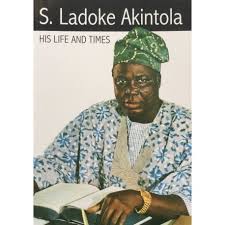
S. Ladoke Akintola: His Life and Times
Author: Akinjide Osuntokun
Top Idea: Political systems collapse when procedural disagreement mutates into existential struggle. The tragedy of the First Republic was not only a clash of personalities, but a structural failure of institutions to mediate between ideological rigidity and pragmatic accommodation.
The Big Idea
Akinjide Osuntokun’s excavation of S.L. Akintola’s career serves as a clinical autopsy of Nigeria’s first democratic collapse. The central thesis is that political rupture occurs when the moral grammar of a society is lost, when rules are treated as tactical weapons rather than neutral guardrails. Akintola represents the archetype of the pragmatic leader who chooses proximity to central power over regional autonomy, a choice that triggered a zero-sum conflict with Obafemi Awolowo. This schism demonstrates that without trusted arbitration mechanisms, ambition inevitably overwhelms restraint, and leads to systemic failure.
Top Lessons
- When federal powers, courts, and security agencies are used to settle partisan scores, they lose their legitimacy. Once a system is perceived as biased, it invites extra-institutional responses (coups/violence).
- Akintola’s belief that influence at the centre (the Federal Government) justified the sacrifice of regional ideological clarity is a recurring Nigerian dilemma. Proximity to power is not a substitute for political legitimacy.
- Political breakdown is rarely inevitable. It is the result of a lack of trusted conflict-resolution mechanisms. When parties become personal power bases, disagreement has no vent, leading to explosion.
- In fragile states, political loss is often interpreted as political death. Akintola’s defiance and isolation illustrate how leadership without a collective ethos becomes a destabilizing force.
My Notes
1. The Schism: Ideology vs. Pragmatism
- This was more than a personality clash. It was a fundamental disagreement on strategy. Awolowo favoured principled opposition and regional autonomy, while Akintola favoured pragmatic engagement with the (federal government) centre.
- Akintola gambled that the Western Region could only thrive by being part of the federal mainstream. This gamble failed because it ignored the local moral and ideological expectations of his base.
2. Institutional Fragility and Weaponization
- The book documents how the federal government used constitutional loopholes to intervene in the Western Region. This weaponization of law turned a local party dispute into a national crisis.
- The physical breakdown of order in the Western House of Assembly symbolized the death of procedural politics. When the chamber becomes a battlefield, the state has already fallen.
3. The Burden of Regional Representation
- Regional leaders in Nigeria are forced to oscillate between serving local identity and navigating a hostile or extractive federal centre.
- Akintola was rhetorically gifted and deeply Yoruba in instinct, yet his tactical alliances with outsiders caused him to be perceived as a traitor to the collective interest.
4. The Violent Closure of an Era
- Akintola’s assassination was not an isolated event but the violent closure of a system that had run out of procedural options. He helped unleash forces (ethnic tension and federal overreach) that he could no longer control.
- History is not about who was right, but about how systems fail to absorb dissent. Akintola’s life is a prototype for the recurring Nigerian crisis of legitimacy.
Historical Precision
- Nigeria’s leadership failures are procedural. The system conflated party loyalty with identity, leaving no room for loyal opposition.
- The crisis escalated because there were no neutral elders or judicial bodies trusted by all sides.
- The Wetie period and the subsequent collapse of the First Republic established a pattern of scorched-earth politics that continues to define Nigerian electoral cycles.
Notable Quotes
- When institutions are used tactically rather than neutrally, they lose their authority altogether.
- Akintola represents the leader who prioritizes access over autonomy, and proximity over principle.
- History is not merely about who was right or wrong, but about how systems fail when they cannot absorb disagreement.