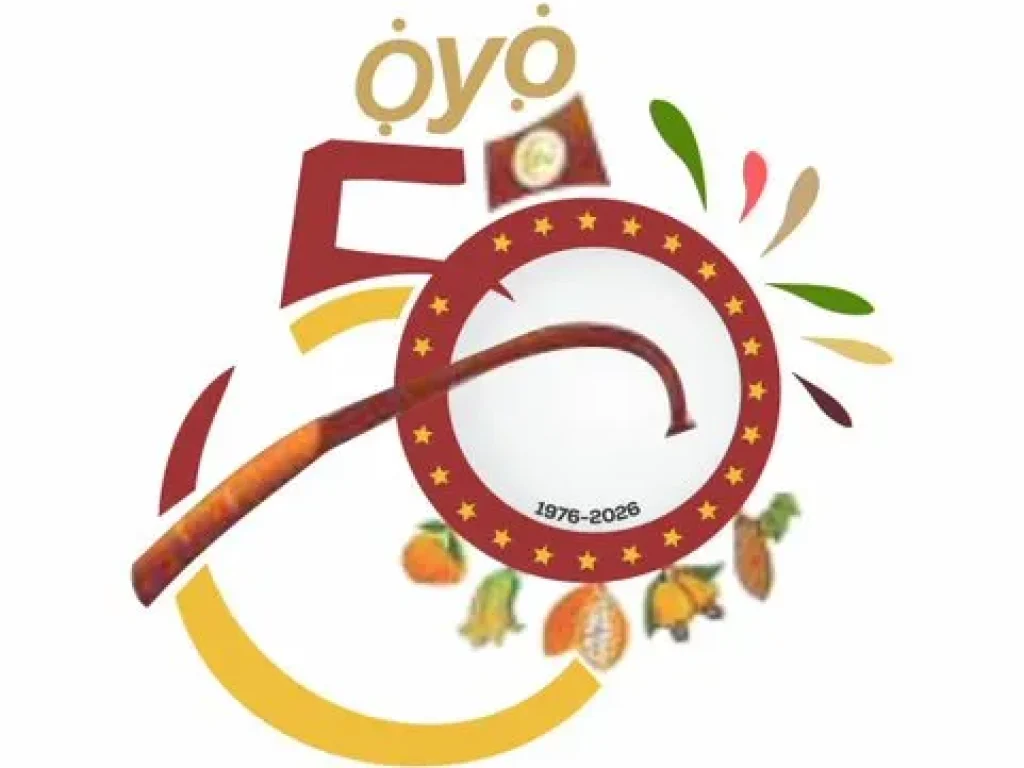
As we celebrate the Pace Setting legacies of Oyo at 50, I cannot but reflect on how to confront the cold mechanics of a state project. I would consider the first fifty years of ours as a foundational probation. It was a period defined by the navigation of identity, the settling of internal borders, and the survival of a State within a volatile federal structure.
The next fifty years, however, will be about state capability. The central policy question is no longer who we are, but what we can do. Can Oyo transition from a historically competent state to a deliberately productive one?
History has a way of leaving structural questions unanswered. In Oyo, these unresolved tensions are what manifests as friction in every budget cycle. We must determine if we are a civil-service state, primarily existing as a payroll processor for public consumption, or a production state designed to extract and create value.
Current governance is often driven by the administrative convenience of Ibadan rather than the economic geography of the state’s five distinct zones. Furthermore, we must ask if our vibrant political competition has actually improved state capacity or if it has perfected the art of redistributing rents every four years. These are the diagnostic gaps that the next fifty years must close.
Oyo is currently trapped in a low-equilibrium cycle. The state economy is largely a consumption-led model driven by public sector wages. This creates a precarious operating system where electoral incentives favour short-term liquidity such as spending on immediate palliatives, over the long-term, often painful investments required for industrialization.
In this system, urban congestion in Ibadan is not a failure of planning, but a rational economic response to our rural communities thinning out. People move where the cash circulates. Breaking this requires disrupting the informal patronage networks that have, for too long, substituted for formal economic opportunity.
The luxury of muddling through has expired. The next fifty years will be governed by pressures that historical prestige cannot solve:
- A massive youth bulge that the civil service cannot absorb and the informal sector cannot dignify.
- The urgent need for resilient food systems and disciplined land-use management in the face of shifting environmental realities.
- A federal system where oil relevance is declining, making allocation-base governance a recipe for insolvency.
- The reality that neighbouring states are learning faster, moving more aggressively to capture regional value chains.
The Strategic Choice
Oyo faces a stark fork in the road. The first path is Administrative Continuity: maintaining salary stability and episodic infrastructure while accepting a slow relative decline. The second is Productive State Transformation: a path that requires the disruption of patronage equilibria and a focus on spatial economic integration. This is a conscious political decision to endure transitional discomfort for long-term resilience.
A state-building agenda for the next fifty years must be organized around systems, and not necessarily sectors.
- Shifting from wage consumption to zone-based production clusters. We must treat logistics and market access as state priorities, not incidental benefits.
- Ibadan must be seen as a hub for a statewide economy, rather than the economy itself. This means formalizing the development roles of Oke-Ogun, Ogbomoso, Ibarapa, and Oyo zones.
- IGR must be tied to productivity. Specifically through land value capture and property taxation rather than extractive measures on the poor.
- We need statutory development plans and the insulation of core economic agencies from the volatility of the four-year electoral cycle.
The ultimate barrier to reform is the political cost of change. Poverty distorts democratic choice. It makes stomach infrastructure a rational demand for the voter and a convenient tool for the politician. The challenge of the next fifty years is to make productivity politically rewarding. Oyo State elites must accept a model of delayed gratification, understanding that a functioning, and productive state provides more security than a patronage-based one in a fragile state.
Designing the Future
Prestige is not a substitute for performance. As Oyo State marks its Golden Jubilee, it must realize that the Pace Setter title is not a birthright, but a standard that must be re-earned through institutional competence. The next fifty years should be shaped as a collective discipline problem. A state that does not intentionally design its future will simply inherit one designed by inertia.